Game feel, level design and teaching players
18 videos · Juice, screenshake and camera logic, then how Nintendo and Valve teach you to play without a tutorial. The most transferable lessons in game design for anyone designing interfaces.
 15:38
Juice it or lose it - a talk by Martin Jonasson & Petri Purho
Martin Jonasson and Petri Purho take a plain game prototype and add small effects one at a time, such as tweening, particles, screen shake and sound. The talk shows how much feel and fun come from this kind of feedback and polish.
 44:10
Jan Willem Nijman - Vlambeer - "The art of screenshake" at INDIGO Classes 2013
Jan Willem Nijman of Vlambeer takes a plain shooter prototype and adds many small tweaks one after another, such as screenshake, recoil, bigger effects and sound. Each tweak changes how the game feels, so the talk shows how polish works in practice.
 17:34
Why Does Celeste Feel So Good to Play?
Game Maker's Toolkit examines why Celeste feels so good to play, looking at how its movement and platforming mechanics are designed. It breaks down the small decisions that shape the feel of the controls.
 15:30
Giving Personality to Procedural Animations using Math
A video by t3ssel8r on giving procedural animation personality with a simple mathematical system that has adjustable parameters. Tuning it produces motion with springy overshoot and anticipation instead of stiff movement, shown with game-style examples.
 4:07
Super Mario World Camera Logic Review
Shaun Inman walks through how the scrolling camera in Super Mario World decides when and how to move, treating it as a set of rules he examines one by one. It is a close study of a part of game design most players never notice.
 12:02
Nintendo - Putting Play First
Mark Brown of Game Maker's Toolkit examines how Nintendo designs its games by starting from a core mechanic and finding what makes it fun before building a game around it. He draws on Miyamoto's comments and examples from Nintendo's games to show this play-first, iterate-on-the-fundamentals approach.
 5:55
How the inventor of Mario designs a game
A Vox video on how Shigeru Miyamoto, the creator of Mario, approaches designing a game. It looks at the thinking behind his games and what makes them feel the way they do.
 8:19
Miyamoto on World 1-1: How Nintendo made Mario's most iconic level
Eurogamer talks with Shigeru Miyamoto about World 1-1 of Super Mario Bros., with the level on screen. He explains how Nintendo designed the first stage to teach players how the game works.
 5:43
Design Club - Super Mario Bros: Level 1-1 - How Super Mario Mastered Level Design
A Design Club episode that walks through level 1-1 of the original Super Mario Bros. and shows how the layout teaches the player the game's mechanics without text. It treats the first level as a lesson in level design.
 19:53
Sequelitis - Mega Man Classic vs. Mega Man X
Egoraptor's Sequelitis episode compares the original Mega Man with Mega Man X, arguing that X teaches players its mechanics through level design instead of text. It uses the opening stage as a worked example, with a comic voice throughout.
 6:36
Half-Life 2's Invisible Tutorial
Game Maker's Toolkit examines how Half-Life 2 teaches the player its mechanics without text or tutorial screens. It breaks down how level layout and pacing introduce new ideas one at a time.
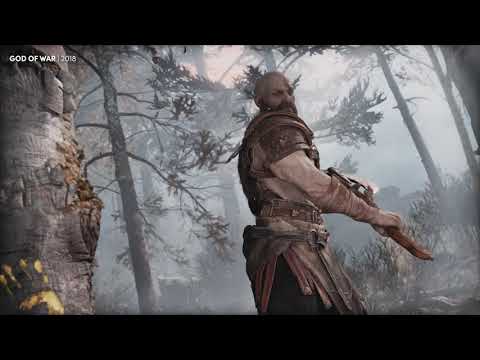 21:27
Can we Improve Tutorials for Complex Games?
Game Maker's Toolkit asks whether tutorials for complex games can be done better. The video looks at ways of introducing mechanics and information to players.
 20:38
What Games Are Like For Someone Who Doesn't Play Games
Razbuten shows his non-gamer wife playing video games and explains how many basic conventions, such as camera control, sprinting and unclear lessons, are invisible to experienced players. It is a look at game literacy and the onboarding gaps in game design.
 17:32
Valve's "Secret Weapon"
Game Maker's Toolkit looks at how Valve uses playtesting to make its games polished and intuitive. The video shows how watching real players, rather than relying on developer assumptions, shapes level layout, tutorials and design decisions.
 8:23
Why video game doors are so hard to get right
A Vox video on why doors in video games are so difficult to get right. It looks at the interaction, animation and camera problems of the simple act of walking through a door.
 19:34
Pac-Man Ghost AI Explained
Retro Game Mechanics Explained breaks down how the four ghosts in Pac-Man choose where to go, including each ghost's targeting rule and the scatter and chase modes. Visual overlays show how a handful of simple rules produce distinct personalities.
 22:29
How the Nemesis System Creates Stories
Game Maker's Toolkit looks at the Nemesis system from the Middle-earth games, in which enemy orcs remember the player and gain ranks and rivalries. The video explains how the system works and why it produces memorable stories without scripted writing.
 1:26:29
Will Wright - Maxis - Interfacing to Microworlds - 1996-4-26
Will Wright of Maxis gives a talk called Interfacing to Microworlds, delivered in 1996 to Terry Winograd's user interface class at Stanford. He discusses designing interfaces to simulation games, including SimAnt, and previews the Dollhouse prototype that became The Sims.